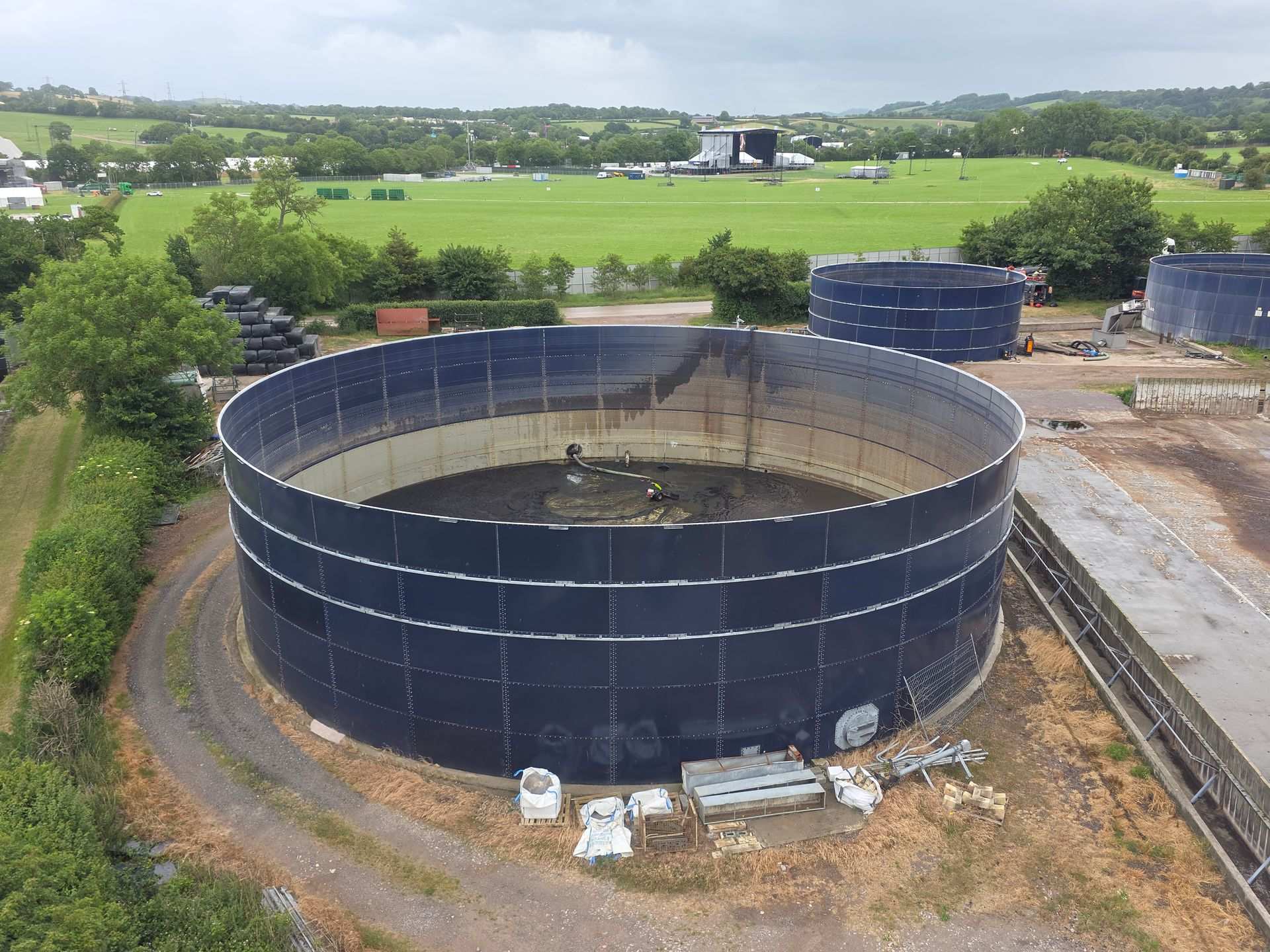
Hexagonal floating covers retain digester heat by 60–80%, cut odor by 85–95%, and reduce digestate management cost — supporting EU IED and biogas operational targets.
What covers do for biogas operators
Biogas operations span anaerobic digesters and digestate storage. Both benefit from surface covers: digesters for heat retention and odor reduction, storage for emission control and operational compliance.
Benefits
| Application | Benefit |
|---|---|
| Mesophilic digester | Heat retention (60–80% loss reduction) |
| Digester | Odor + H₂S reduction (85–95%) |
| Digestate storage | Ammonia + VOC reduction |
| Storage crust prevention | Surface coverage |
How floating covers work for biogas operations
A modular hexagonal cover on a digester or digestate storage reduces operating cost through three parallel mechanisms:
- Surface heat retention — eliminating evaporative cooling at the digester surface preserves process heat.
- Mass-transfer reduction — odor and emission release at the water-air interface is reduced 85-95%.
- Crust prevention — surface coverage suppresses the floating crust that otherwise forms on digestate storage, eliminating periodic mechanical breakup operations.
Continuous geomembrane covers add full gas capture; the two formats are typically combined in well-engineered biogas operations.
When to use covers in biogas
- Mesophilic digesters in cold ambient climates (heat-budget reduction)
- Digestate storage in community-pressure-sensitive locations (odor + ammonia capture)
- Any operation reporting under EU Industrial Emissions Directive
- Sites with mature CHP infrastructure where digester thermal stability supports gas output
Covers vs. alternative odor controls
Mechanical biofilters and activated carbon scrubbers handle off-gas after release; covers prevent release at the source. The two approaches are complementary — covers reduce the loading on downstream treatment, lowering overall operating cost. See floating cover vs. alternatives for the broader trade-off.
Methane management
For full methane capture, continuous membrane variants with gas-handling equipment are appropriate. Modular hexagonal covers reduce methane release substantially without capture; combinations of modular and membrane covers are deployed where partial recovery is the operational goal.