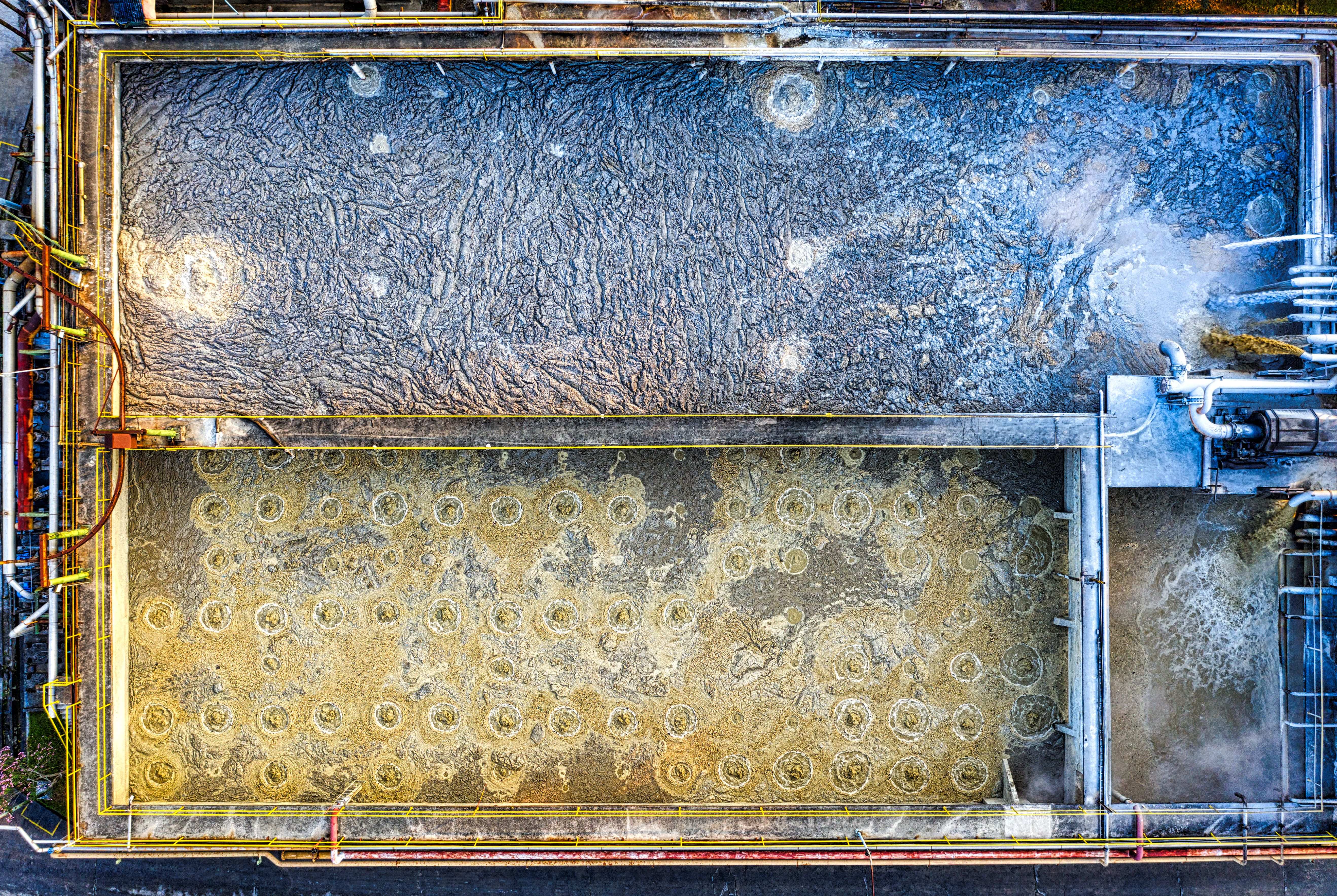
For EU biogas plants, food-processing operators, and aquaculture operations, heat retention on warm water surfaces is an energy-cost lever. A modular hexagonal floating cover cuts surface heat loss by 60–80% — keeping process heat on hot wells, cooling ponds, mesophilic biogas digesters, and warm storage. EuroCover quotes both Hexprotect® AQUA and Hexofloat® for this brief.
What is heat-loss insulation for water?
Heat-loss insulation for industrial water bodies means reducing the rate at which a warm water surface loses heat to the atmosphere. The dominant heat-loss mode for warm open water is evaporative cooling — the same physics that drives evaporation, but viewed through the energy budget. Eliminate the evaporation and you eliminate the heat loss.
How heat retention works
A floating cover reduces heat loss through three mechanisms:
- Eliminating evaporative cooling — for warm water, this is the largest single heat-loss term.
- Reducing convective heat loss — the cover surface dissipates wind energy and reduces air motion at the interface.
- Reducing radiative heat loss — HDPE has lower thermal emissivity than open water for the operating temperature range of typical industrial applications.
For mesophilic anaerobic digesters (35°C target), warm process water, and freeze-prone storage, the cover reduces the heating energy budget by 60–80%.
Benefits
| Metric | Value |
|---|---|
| Surface heat-loss reduction | 60–80% |
| Evaporative cooling reduction | 90%+ |
| Freeze risk on cooling ponds | Significantly reduced |
| Lifecycle | 25+ years |
| Maintenance | Visual inspection only |
Model your heating cost savings
AWTT’s Heat Loss & ROI Calculator compares operating cost across three scenarios — no cover, solid geomembrane cover, and AWTT modular cover — using a five-component ASHRAE heat-loss model with real weather data, returning payback period and 10/20-year total cost of ownership.

Open the AWTT heat-loss & ROI calculator →
When to use heat-loss insulation
- Mesophilic anaerobic digesters (35°C target)
- Hot process water (district heating returns, brewing, dairy CIP storage)
- Cooling pond freeze prevention
- Aquaculture overwintering ponds
- Solar pond stratification preservation
Related
For the engineering principle and US DOE heat-retention recognition, see pond-cover.com/the-hexagonal-cover and the heritage page.