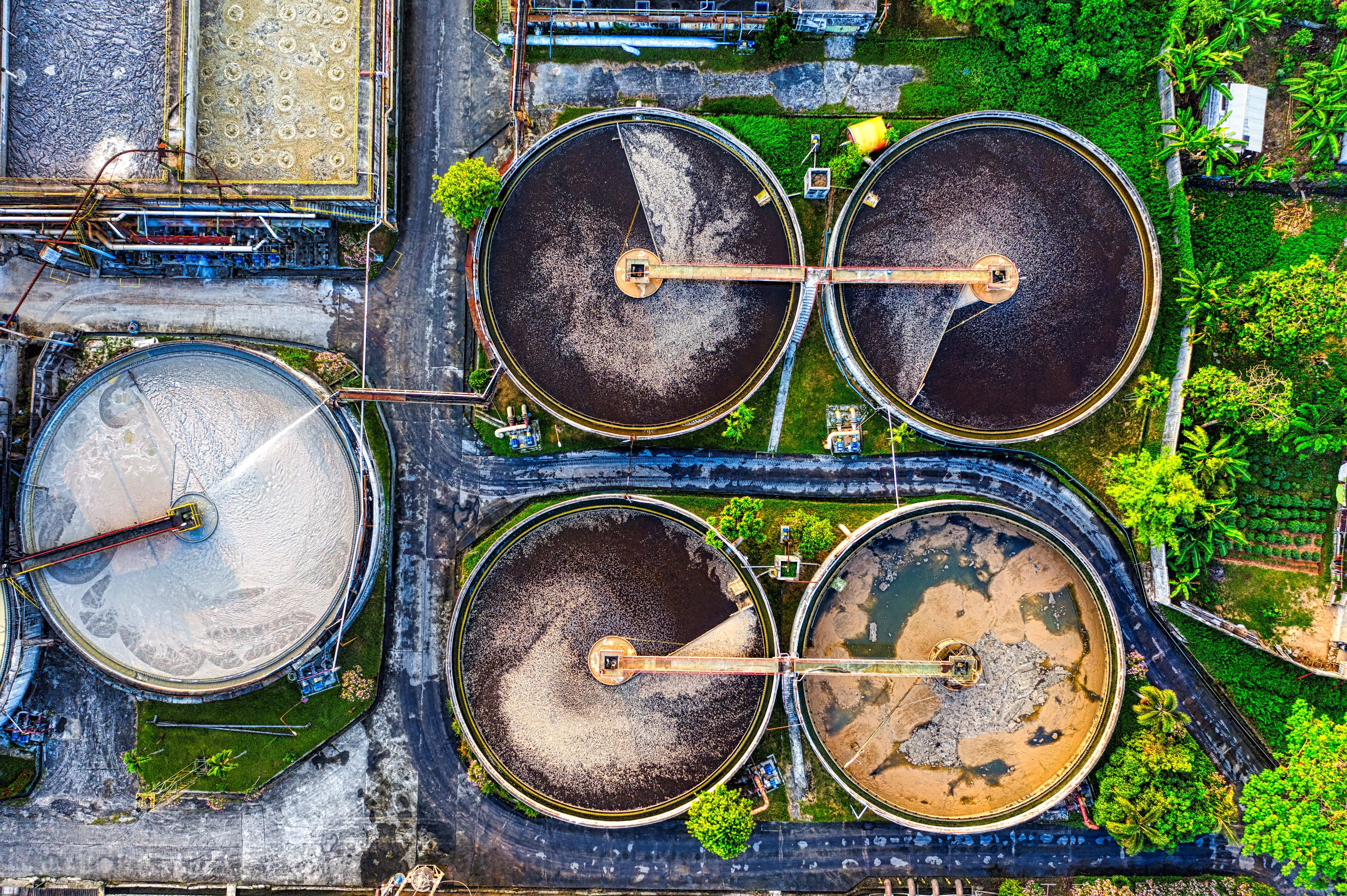
Hexagonal modular covers reduce wastewater plant odor by 90%+, H₂S by 85–95%, and VOC release by 70–85% — supporting EU IED compliance and reducing community complaint pressure.
What covers do for wastewater operators
Wastewater treatment is under sustained pressure on emissions, odor, and worker safety. Floating covers on equalisation, storage, and effluent ponds reduce the dominant emission pathway (the water-air interface) without disrupting biological treatment.
Benefits
| Metric | Value | Source |
|---|---|---|
| Odor reduction | 90%+ | AWTT odor-control solution reference (source) |
| H₂S capture | 85–95% | AWTT odor-control solution reference; consistent with USDA Bureau of Reclamation field measurement (source) |
| VOC capture | 70–85% | AWTT odor-control solution reference (source) |
| Algae suppression in effluent ponds | 95%+ | AWTT algae-control solution reference (source) |
| Lifecycle | 25+ years | AWTT Hexprotect® AQUA product reference (source) |
How covers work at a wastewater plant
A floating cover on an equalisation, storage, or effluent pond reduces emission release through:
- Physical barrier at the water-air interface
- Reduced air motion at the surface (slower dispersion of any released vapour)
- Headspace equilibration (rapid saturation of trapped air, reducing the driving gradient)
These are mechanism-level effects; the operational outcome is documented 90%+ odor reduction and 85-95% H₂S capture in deployments at municipal and industrial wastewater plants.
When to use covers at a wastewater plant
- Sites with community-pressure odor complaints
- Operations subject to EU Industrial Emissions Directive
- Equalisation and storage ponds upstream of biological treatment
- Effluent ponds where algae loading complicates discharge compliance
- Sludge holding tanks (where modular cover compatible with cover-handling equipment)
Covers are generally NOT appropriate for active aerated biological treatment basins — those need the surface gas exchange. Covers also need careful aeration accommodation on lagoons where aeration is part of the process.
Covers vs. alternative odor controls
- Biofilter scrubbers, activated carbon, and chemical scrubbers treat off-gas AFTER release.
- Floating covers reduce release at the source.
- Most modern wastewater designs use both — covers upstream of any biofilter or scrubber reduce the loading and the operating cost.
Regulatory context
- EU Industrial Emissions Directive (IED) — documented emission reduction supports compliance.
- EU Urban Waste Water Treatment Directive — covers support residual treatment targets.
- National air-quality regulations — covers help local-airshed compliance where wastewater is a named source.