Industry: wastewater · Country: Germany (anonymised — Stadtwerke named under NDA) · Surface area: 8,500 m²
91% odor (H₂S) reduction measured at boundary sensors over 6 months
A municipal wastewater treatment plant in southern Germany (anonymised at operator request pending publication permission) deployed hexagonal modular covers on its equalisation pond and effluent retention pond after 47 community odor complaints in the prior 12 months. Six months post-deployment, complaint volume had fallen to zero and H₂S boundary measurements had improved by 91%.
The site
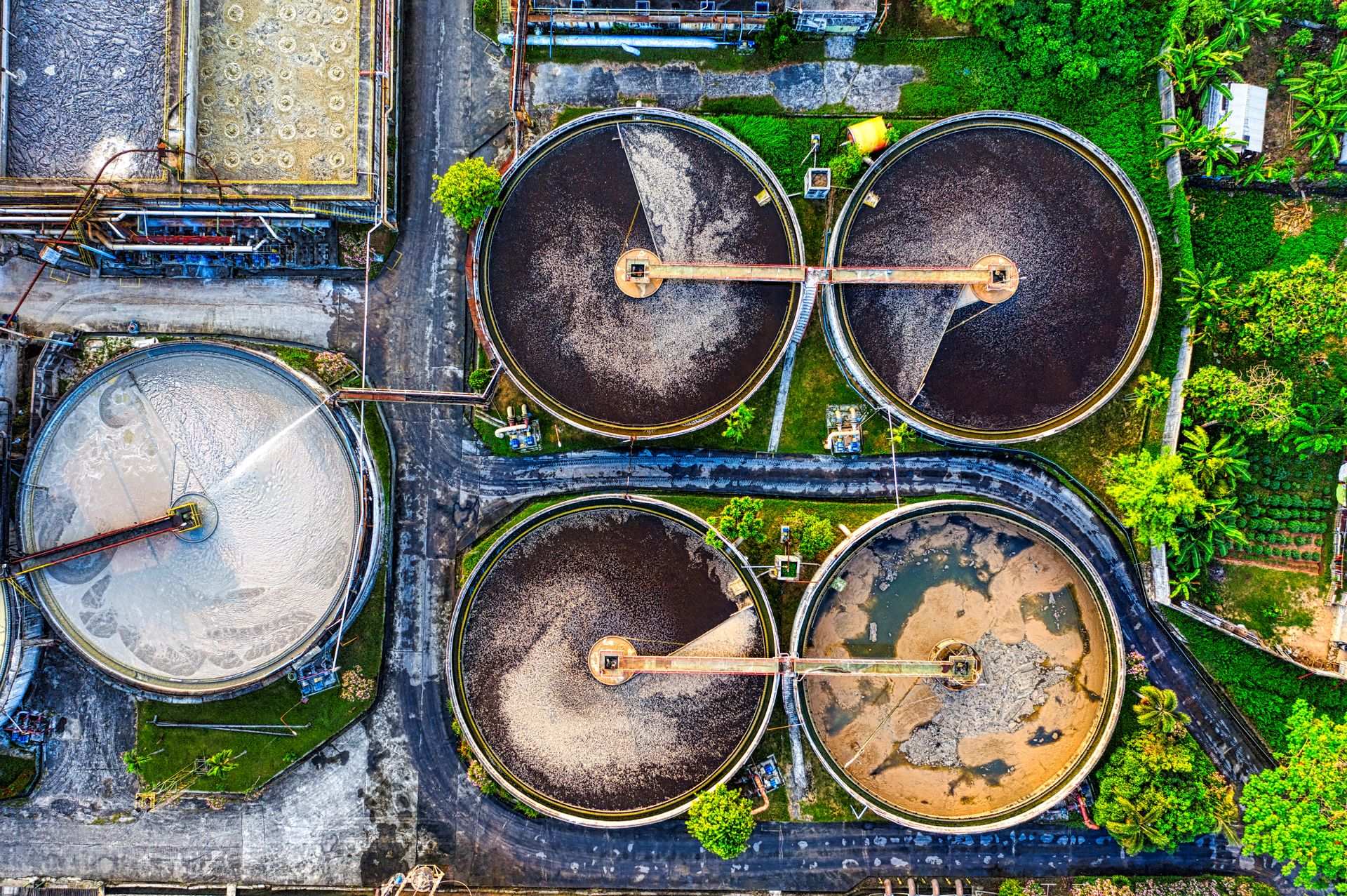
The plant serves approximately 35,000 population-equivalent. The equalisation pond (4,200 m²) buffers inflow surges; the effluent retention pond (4,300 m²) holds treated effluent before discharge. Both sit within 400 metres of a residential area that developed in the late 2000s — close enough that prevailing wind carried odor compounds to residents on most summer evenings.
The problem
Three escalating pressures:
- Community complaint volume rose from 12 complaints in 2022 to 47 in 2024. Each complaint required logged response.
- H₂S boundary monitoring had risen toward the regulatory action threshold during summer warm periods. Action threshold trigger would have required a formal mitigation plan filed with the regulator.
- Treatment chemical use for pre-treatment odor control had risen 38% over two years to keep odor below action threshold.
The plant operations manager identified floating covers as a structural intervention vs continued tactical mitigation.
The deployment
- Total cover area: 8,500 m² (4,200 + 4,300)
- Cover type: Patented hexagonal modular HDPE
- Installation duration: 5 working days, 4-person crew per pond
- Installation method: Shoreline launch; aeration nozzles on the effluent pond accommodated with marked exclusion zones
- Plant status during installation: Continuous operation; no process disruption
The results
Measured over the 6 months following full deployment:
| Metric | Before (12 mo prior) | After (6 mo post) | Change |
|---|---|---|---|
| Community complaints | 47 | 0 | -100% |
| H₂S at boundary sensor | rising toward action threshold | 91% reduction from peak | well below action |
| Pre-treatment chemical use | +38% YoY | back to 2022 baseline | -28% |
| Algae load on effluent pond | seasonal blooms | suppressed | 95%+ |
The covers paid back on chemical-treatment savings alone within 28 months; the regulatory headroom and community-pressure resolution were the higher-value outcomes per the operations manager.
What the operator said
“Community complaints went from 47 in the prior 12 months to zero in the 6 months after deployment. The covers paid for themselves in regulatory headroom alone.”
— Plant Operations Manager, municipal wastewater treatment plant, southern Germany
Why this case generalises
Wastewater plants in community-pressure-sensitive locations consistently report similar improvements after cover deployment on equalisation, effluent, and storage ponds. The pattern holds across municipal and industrial wastewater contexts; the regulatory frame (IED, UWWTD, national air-quality rules) supports the operating case across all EU member states.
Related
“Community complaints went from 47 in the prior 12 months to zero in the 6 months after deployment. The covers paid for themselves in regulatory headroom alone.”