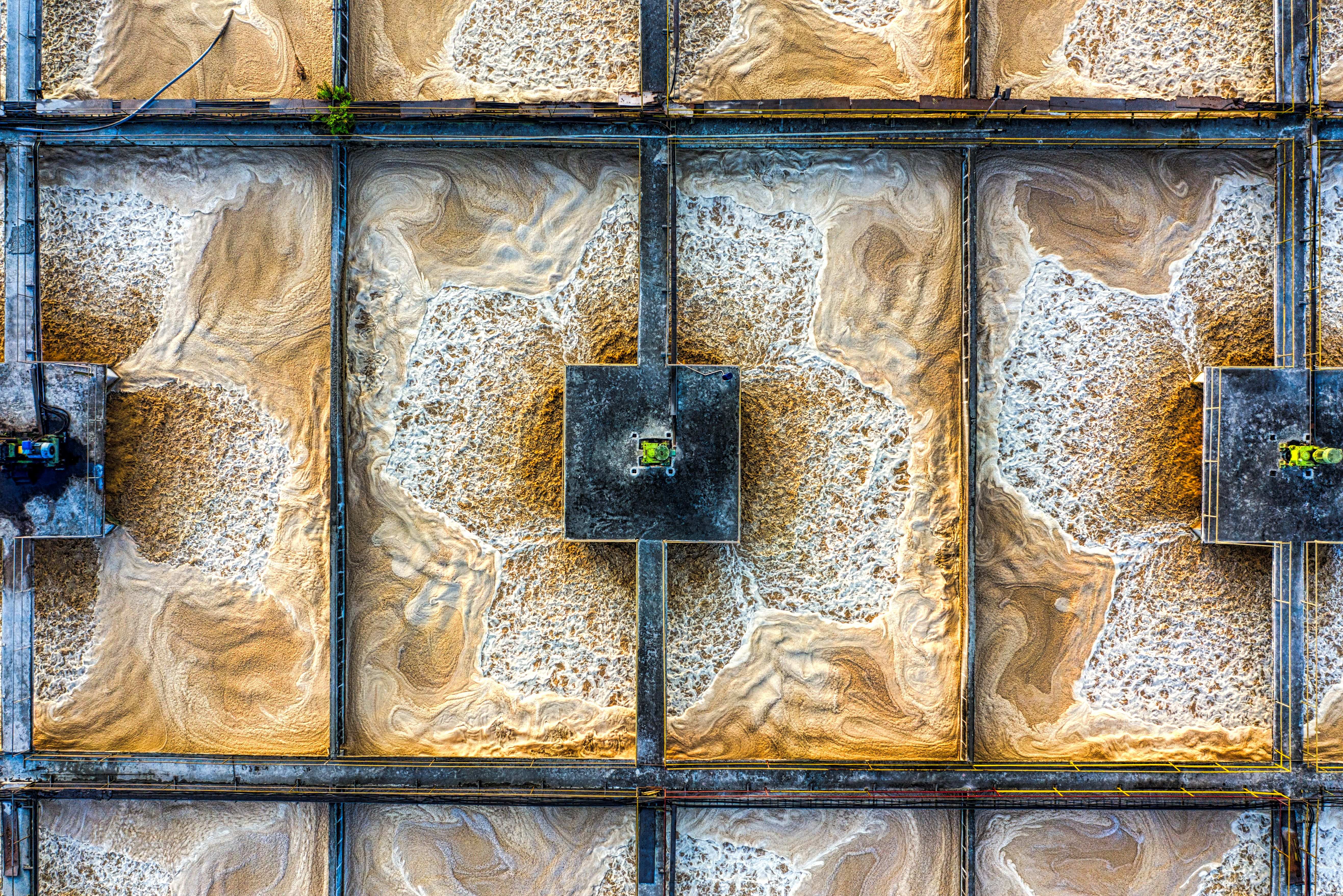
For EU lagoon operators, sludge reduction by bioaugmentation means digesting the treatable organic fraction of the sludge blanket in place — turning a seven-figure mechanical clean-out into a managed operating-cost line. EuroCover supplies the SediLogic® range for this brief, sized to your lagoon by the manufacturer’s dose table, with the honest caveat stated up front: biology treats the organic fraction only, and we will tell you when your lagoon is a dredging job instead.
What is sludge reduction?
Sludge reduction is shrinking the accumulated blanket of settled solids at the bottom of a lagoon or tank before it consumes detention time, freeboard and effluent quality. Solids settle continuously; the biodegradable share digests slowly under anaerobic conditions; what is left accumulates. Sludge handling already represents 40–60% of total operating cost at many treatment facilities, and an unplanned mechanical clean-out is the largest single capital event a small utility faces on a lagoon.
How bioaugmentation works
The SediLogic® formulation is a Bacillus-sourced enzyme blend — protease, cellulase and lipase — supplied as a dry product (Bacillus sporulates, so it survives drying essentially intact):
- Sinking solid (SediLogic® Core) — dosed onto an established blanket, sinks to the sludge interface where the accumulation actually sits.
- Water-soluble pouch (SediLogic® Maintain) — maintenance dosing and general organic load in the water column, for adequately mixed lagoons.
The organisms digest volatile organic solids in place. Published volatile solids reductions in this category run from roughly 33% in controlled enzyme studies to around 60% in vendor case studies.
What it cannot treat
Sand, grit, silt, mineral precipitates and plastics are not biodegradable — they remain at any dose, from any vendor, in any format. The split between volatile and inert material differs in every lagoon, which is why a representative sludge sample is the first step of any honest programme. If your accumulation is mostly inert, the answer is dredging, and we will say so before you spend anything.
Benefits of a sized programme
| Metric | Value |
|---|---|
| Volatile solids reduction | 33–60% |
| Sludge handling share of operating cost | 40–60% |
| Mechanical dredging benchmark | $300–800 / dry ton |
| Full mechanical clean-out | $875K–$1.75M (estimated) |
| Product-spend trim from lagoon sizing vs rule of thumb | 5–20% |
When to use bioaugmentation
- Municipal and industrial wastewater lagoons with a measured sludge blanket
- Operators facing a dredging quote who want to defer the capital event
- Sites with rising haulage costs on sludge holding and thickening tanks
- Lift stations and grease interceptors with fats, oils and grease accumulation
- Anaerobic digesters where volatile solids loading governs destruction rate
When not to use it
- Accumulation that is mostly inert grit, sand or silt — that is a dredging job
- Poorly mixed lagoons — aeration comes first; biology follows
- Compliance emergencies that need volume back this month, not this season
The evidence, stated plainly
Every efficacy figure in this category is vendor-published — including the ones we cite. No independent head-to-head comparison of liquid versus solid formats exists, and penetration into a dense anaerobic sludge mass remains an unsolved problem for every format on the market. What is well established is narrower: enzyme mixtures of protease, cellulase and lipase reduce total suspended solids by 30–50% and improve settling. That is the mechanism we sell, and it is a narrower claim than most of this category makes. The manufacturer publishes the full evidence review at lagoonsludge.com.
For the complementary water-management briefs, see odor and emission control and evaporation control.